If you’ve ever watched water pool on top of your lawn and then run down the driveway, you’ve met Georgia red clay. It’s the default soil across North Atlanta and most of the metro area, and it changes how a sprinkler system should be designed and scheduled.
Why clay behaves differently
Clay has tiny, tightly packed particles. Water can’t soak in quickly, so if you apply it faster than the soil can absorb, most of it runs off before it ever reaches the roots. The lawn looks watered, but the root zone stays dry — and you pay for water that ended up in the storm drain.
Design for the soil, not against it
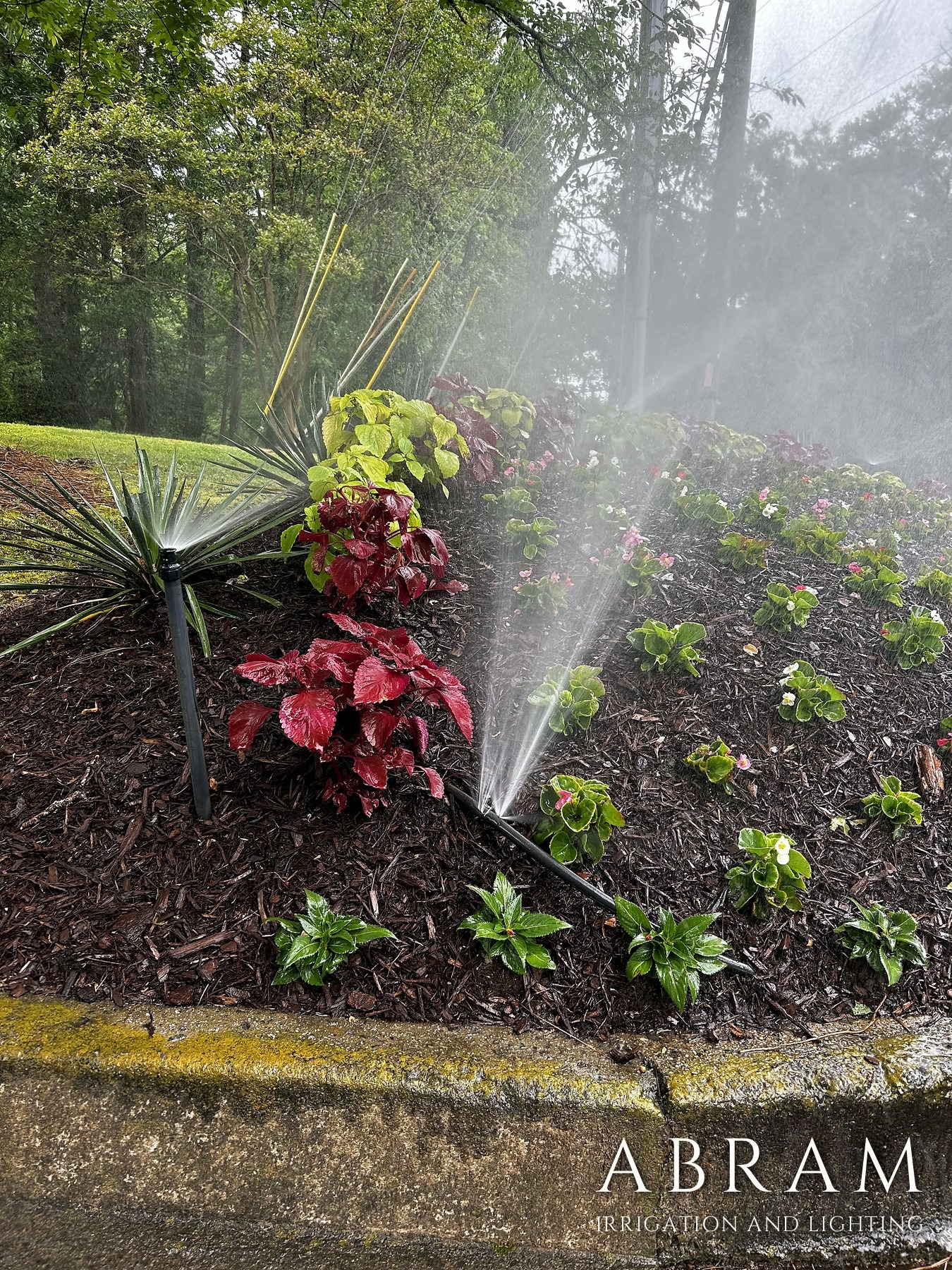
- Lower precipitation rates. We choose heads and nozzles that apply water slowly enough for clay to keep up.
- Zone by slope and sun. A sloped front yard and a shaded back bed have completely different needs. Lumping them on one zone guarantees waste somewhere.
- Head-to-head coverage. Every head should throw water to the base of the next one. Gaps become the brown spots you notice in August.
Cycle and soak
The single most effective trick for clay is cycle-soak scheduling: instead of one long run, the controller waters in several shorter bursts with soak time between them. Each burst goes in before runoff starts, and the soak lets it absorb. A smart controller handles this automatically.
The North Atlanta bottom line
Good irrigation here isn’t about more water — it’s about matching delivery to the soil. Designed right, a system on red clay can stay greener on less water than a poorly scheduled one uses. If your lawn has stubborn dry spots or you see runoff every cycle, those are fixable design problems, not something you have to live with.